Tuesday, 16 September 2014

Slowly, slowly...

It has been a slow few weeks since I last posted. I have had to try a number of different things to try and work out how to get the mealworms to mature faster including putting in more food, keeping them in darker and warmer climes.

The mealworm life-cycle can be anything from 3 months to 6 months. However, I think that I may have too many in too small a place - they swarm any fruit/veg that I put in but I'm worried that they don't have enough space. I am breaking some smaller groups out to try and encourage growth.

Hundreds/thousands of mealworms swarm any fruit put in with them


Gallingly, I have seen some in my recycling bin (transferred there in vessels of old fruit that needed to be removed I think) that are even more mature than the ones that I am rearing directly and it goes to show that the environment and space might be key.

Lots of people ask me regularly about them - there is definitely public interest; more than I thought there might be. I think it is indicative of the fact that Bristol is especially fertile ground for new ideas and more sustainable ways of doing things.

As soon as I get some large worms I plan to develop some great-tasting food to share with everyone that has asked me about them and help turn people onto the idea of insects as a viable alternative to other protein sources.

Another great insect-focused caught my eye recently too - check it out. Entomophagy is the future: Insects Are Food.

Thursday, 14 August 2014

The eggs, the dust and the mealworms

It appears that the beetles have been busy...

I have to say that I didn't really see the eggs that they had laid, but I started noticing dust on the side of my boxes that I had considered to be mould.

As I looked at it closely I realised that the dust was moving and that I had finally bred my first mealworms. 
What I thought was dust was actually the infant mealworms.
Over the next few days I started seeing more and more of them, moving like one large, swarming organism and surrounding any bits of veg in the box. Their movements are quite mesmerising:


However, soon after receiving these new arrivals, I noticed the level of condensation in the boxes getting worse and worse. One day there seemed to be very little movement in the box and, I think, a number of mealworms had died - most probably of suffocation.

To deal with this development I bought some hessian to cover the top of the box (and help keep out roaming infants who can climb up the side of the box) and allow more air flow. This has seemed to solve the problem.

I think that I will also need to monitor how well the infants develop in different-sized boxes as there may be too much competition for food.

So all-in-all an interesting few days. Recommendations are: its probably not dust that you see - they're mealworms, keep good ventilation - especially when their numbers increase, and the amount of space and food offered will determine the number that will mature.

The speed with which the mealworms mature will determine when I can start cooking with these protein packages. I also plan to split them up into groups to see how different foods, and environments may affect their growth and taste... all exciting stuff to come!

And when you think that 38% of the world’s total land area was used for agriculture in 2007, the idea of using these space and energy-efficient creatures becomes more and more appealing.


Friday, 1 August 2014

With a little help from my friends...the beetles

I have found that breeding insects is a fascinating process, although it also takes some time (one of the current barriers to mass production of insects as a protein source) as the need to split the chrysalises from the mealworms and then any beetles from the chrysalises.

Each box has been laid with oats and - in the boxes for mealworms and beetles - some veg (I have been using leftovers such as offcuts of carrots, ginger, broccoli etc. as well as apple cores, and the remains of grapefruit after breakfast). 

The shop-bought mealworms have gradually been metamorphosing one-by-one and I have had to pick each pale, shape and put them into another box and wait, and check and wait.... and within a week or so I have got beetles!


These little beauties are now going to help provide me with my own generation of mealworms that I can feed and eat. In order for them to lay eggs I have also added egg boxes to their box, which apparently act as a favourite place for beetles to lay them.

The transformation from mealworm, via their chrysalis into a beetle must take so much energy - the larger exoskeleton and body must require a lot of protein - hence the mealworms are packing a lot in before undergoing the process.

I'll be keeping my eyes out for eggs and then my first generation of mealworms. Keeping them in the airing cupboard at as close to 30 degrees as possible is the best environment for them and the heat that we've had here in the UK has been helping towards that end.

I know that eating insects is going to be a big step for some people (unless we can start sneaking them into our food without people knowing a la any sweet with crispy shell, made from cochilea), so - if you want to learn more about how you can eat more sustainably without taking that plunge (yet!) then take a look at the Sustainable Food Trust site.

Tuesday, 15 July 2014

Come get your protein here!!!

An estimated 2 billion people worldwide eat insects as part of their diet. Are these people crazy or do they have a point?

From promoting sustainability to wanting to put on muscle, insects may be an answer to a lot of our problems. 

Taking a look at some of the stats suggests that those 2 billion people may have a point, although they could still be a little crazy.

For example, the composition of unsaturated omega-3 and six fatty acids in mealworms is comparable with that in fish (and higher than in cattle and pigs), and the protein, vitamin and mineral content of mealworms is similar to that in fish and meat.

The below table from the FAO shows how favourably insects rate on in protein content against other animals:


Besides this, many insects are rich in micronutrients such as copper, iron, magnesium, manganese, phosphorous, selenium and zinc, as well as riboflavin, pantothenic acid, biotin and, in some cases, folic acid.

So even a quick overview can suggest that insects are of great nutritional value - certainly not deficient compared to their more common counterparts.

The clincher for me is that for the same amount of feed and far less water, space and energy, you could get four times as much cricket as you could beef. And if you want pure protein for building muscle, why buy whey when you can get a more well rounded, natural source?

While I haven't started rearing any crickets, my mealworms have started metamorphosing, which is fascinating. My long, thin mealworms have started turning into what looks like mini aliens from the film Independence Day:
  The pupating mealworms will turn into beetles before mating and laying eggs to hatch as more mealworms

I will keep you updated on their progress as I should start seeing beetles soon. And fear not - the protein rich meal-worms are eaten before pupation.

In the meantime check out this great video from the BBC on insects as part of our future food system.

Monday, 7 July 2014

What do you need to rear mealworms?

The idea of this blog is to share my experiences of rearing insects and help inspire people to look at our food in a different way in order to tackle the worldwide issue of food security.

There will be plenty of news, research, and recipes to come, but firstly: how do you rear mealworms?

In order to keep mealworms you need (a version of) the following:

- Three containers
- Oats
- Moisture-carrying food e.g. Carrot
- Newspaper/card and egg cartons

Three containers are needed because there are three phases in the darkling beetle life-cycle and each phase will require a new container. Each container should contain some oats.

The mealworms live in and eat the oats, while the veg/fruit provides some moisture. The container in which the mealworms will grow needs to be supplemented with paper/card as the mealworms like to stay under cover.
The mealworms will, after a while, transform into a pupating state. The pupae need to be separated from the mealworms in case they are fed upon by the mealworms. They will not feed or move during this phase. There should be oats and a small amount of other food for when the pupae morph into beetles.

The beetles will emerge from the pupae and also then need to be separated in order to prevent them feeding on the pupae. The final container should contain oats and other food and egg cartons. Female beetles will lay eggs in the oats and in the carton and eventually tiny mealworms will hatch from these.

There are plenty of places online from which you can order live insects as they are used widely as pet food and fish bait. These can provide the base for your stock.

When a rustling box labelled CAUTION: LIVE INSECTS arrived at my workplace the other day I had a lot of comments, but the mealworms are in their new home and the games can begin...


Wednesday, 2 July 2014

Why eat insects? One man and his worms


My name is Sean McGough and I’m about to start rearing insects. Firstly mealworms and then crickets. I’m relatively normal, studied History, work at a charity called TreeAid after working as a Project Manager for an engineering consultancy and I have no prior experience in rearing insects.

Why? I have been asked why more times than I can count – normally accompanied by a shrivelled face of disgust. “For food” I will respond. And then go on to explain that insects could be the future for our high-protein driven food chain, which currently helps cause untold problems.

While travelling in 2012 and 2013 I saw the destruction caused by worldwide demand for certain products. In Borneo, the rainforest has dwindled to small pockets and corridors in which animals like orangutans struggle to survive because of the demand for palm oil. In Bolivia, the dry forests of the Chaco have been cut and burned to create space for soy production, which is used to feed UK cattle, poultry and pigs. And in Brazil cattle ranchers have cleared huge swathes of forest to rear our meat. These backdrops acted as a constant reminder that the decisions we make at home can leave a far-reaching environmental footprint.

A report from the Food and Agricultural Organisation (FAO), 'Edible insects
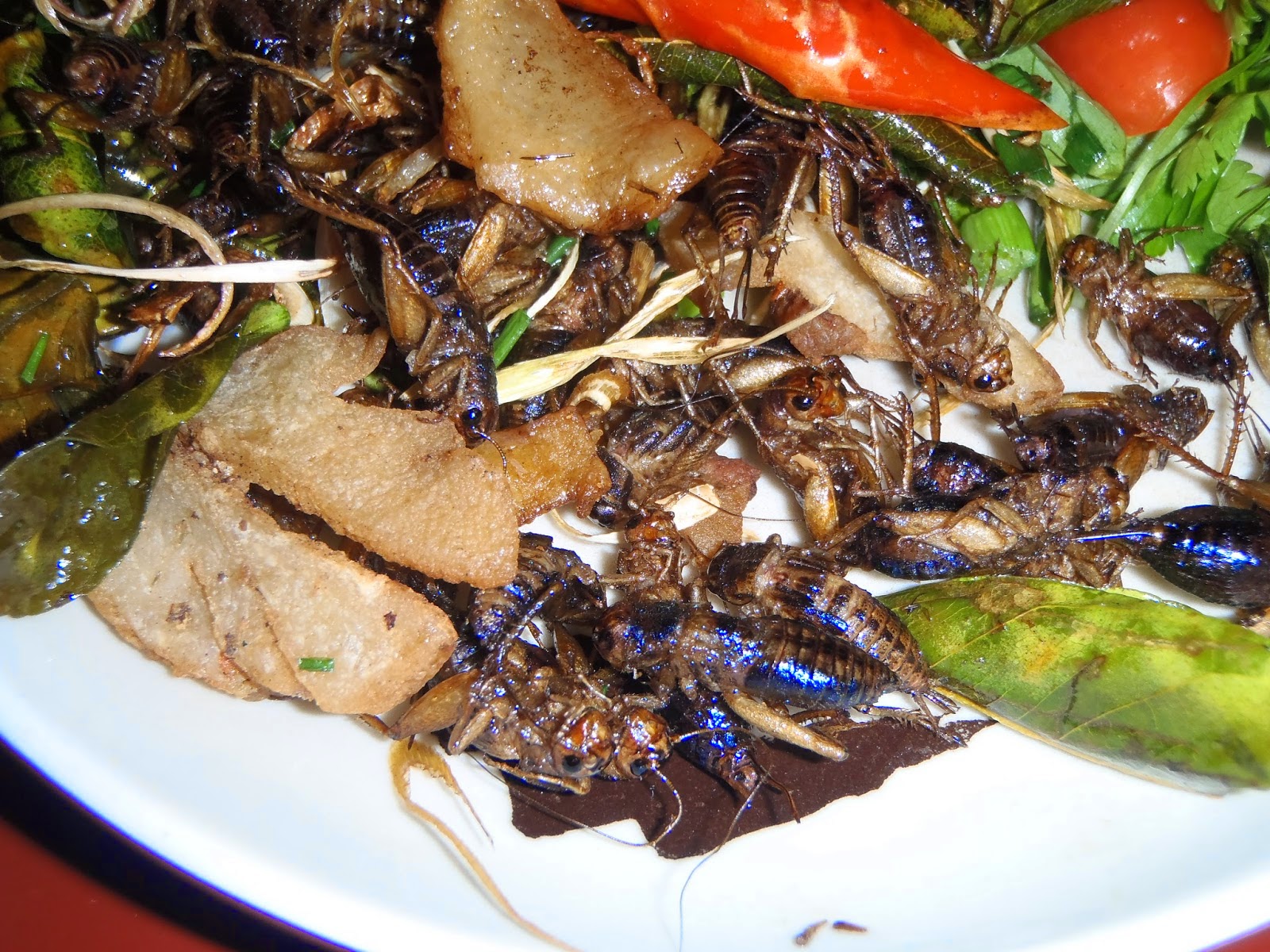
Future prospects for food and feed security', published in 2013, followed on from quite a lot of press about the potential of using insects as a foodstuff. The information coming from the UN and the experience of eating insects (crickets, silkworms and ants) while abroad led me to believe that this really could be the future of food. Insects offer a more sustainable approach than other sources due to their ability to produce more protein while taking up less, space, water, food and energy. They can also be really tasty.


I am taking this seriously and ordered some fresh, live mealworms from an online shop.

In future this could be a huge business - hopefully one that helps reduce our consumption of destructive sources of protein.

And I will share as much as I can on here for anyone that takes a passing interest or decides that they want to rear any insects - be it for fun, pet food, to feed the birds or to learn more about the future of food!